What Architecture, Recipes and Vanlife Taught Me About Creativity
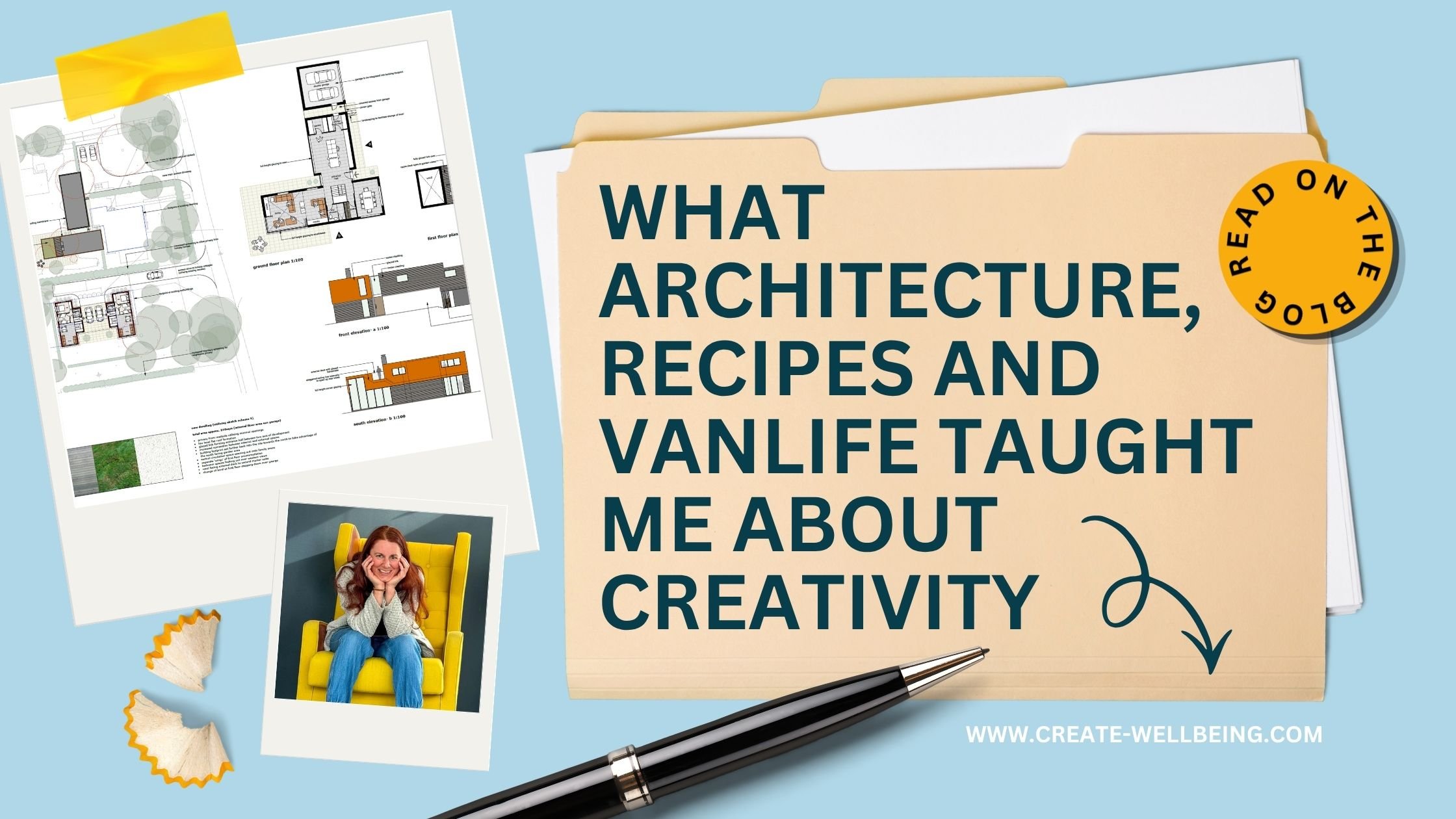
The blank canvas isn't always freeing.
For a long time, I believed creativity meant starting from scratch.
I’m guessing I’m probably not the only one, since we're taught originality means inventing, or building something from nothing, or that freedom means having endless possibilities.
But one thing that has shown up time and time again in my life (and it often surprises me), is that a blank canvas is so often harder to work with than a container with structure.
Fifteen years ago when I was working as an architect, I found the projects I enjoyed the most were those that focussed more on remodelling and extending an existing residential property to create something beautiful and unique, rather than those that started from scratch on an empty plot.
(Fun fact the pic above is actually part of one of my own CAD drawings from about 17 years ago!)
I loved the process of taking a basic foundation, and turning it into a unique and exciting dwelling, that would look entirely different even when much of the existing structures were retained.
There were things I had to work with: the existing external walls, the position of the windows and doors, the nature of the existing roof structure, the shape of the building and how it sat within the plot and how the landscaping responded to it.
I would be intentional in what I would choose to modify to create the greatest change to suit the clients needs, whilst doing so in an efficient way. Far from limiting the design, those constraints gave me something to respond to. They created a starting point, and from there the creative possibilities opened up.
It surprised me at the time, since I would have assumed the blank canvas offered the greatest creative freedom, yet freedom without a loose shape to play within, often felt less creative, and more overwhelming in knowing where to begin and where to focus my attention.
When constraints create more possibilities.
I noticed this happen again, when I made the transition to a plant-based diet back in 2012, and began writing my recipe food blog ‘Including Cake’ (let me know if you’ve been following since those days!) I noticed the huge sense of creativity and freedom within (and because of!) the ‘restriction’ of removing animal products - so much more so than when I had all ingredient options at play.
More recently I've noticed the same thing in my vanlife journey, too.
On paper, vanlife offers almost ridiculous amounts of freedom. I could wake up and decide to go almost anywhere. But very quickly I found that having everywhere as an option can actually make travel harder to plan, rather than easier. I was constantly overwhelmed with all the what ifs.
These days, I often use housesitting dates and locations as anchors for my travels. Once I know where I need to be and when, the space in between becomes much easier, and actually much more fun, to plan around. I have a starting point, an end point and a loose container to play within.
Far from making me feel restricted, those parameters give me the freedom to explore everything in between without having to hold every possible destination in my head at once.
And that's when I started to realise this wasn't really about architecture, recipes or vanlife at all…
What interested me was that I'd stumbled across the same pattern multiple times, in completely different parts of my life, and realised it explains quite a lot about how I work.
Having fewer possibilities didn't make me less creative - it gave my creativity somewhere to go. I see that freedom isn't necessarily about having more options, it's also about having fewer decisions to make.
And I think there's an important distinction between restriction and structure.
Restriction says: "You can't do that."
Structure says: "Here's somewhere to begin."
One can feel limiting. The other can be liberating.
Over the years I have noticed a similar pattern with my design clients.
When sending me their content for a website build, having visual guidelines as a starting point can create the much needed clarity and creative confidence to know what to include, without the loss of freedom to create something completely aligned.
A foundation gives you somewhere to begin.
I use a map when I go hiking. I don't see the map as restricting where I can go. It gives me enough information to make decisions about the route while still leaving plenty of room for exploration.
I think good creative structure works in much the same way. It shouldn't tell you exactly what to do. It should give you enough direction to get moving, while leaving enough space and flexibility to make it your own.
And it's interesting how often we already use templates without thinking twice about it. Canva templates for social posts and presentations, Reel templates, newsletter layouts, content frameworks. We don't see these as uncreative, they're simply starting points that make it easier to bring our own ideas to life.
So why do we sometimes expect ourselves to start from scratch when it comes to our own creative work?
And this matters because most overwhelm isn't caused by a lack of ideas. It's caused by having too many disconnected pieces, without knowing where they belong or which one to deal with first.
When everything feels equally important, every decision creates another decision. Which idea comes first? Which photo? Which words? What can I leave out? What am I missing?
A thoughtful structure reduces some of that mental load. It gives you somewhere to put things, even if you change your mind later. And just as importantly, it helps you see what's missing.
From creative structure to website design.
This is the same principle I kept seeing in my design work.
When clients sent me everything they had for their new website project - photos, logos, notes for the Home and About page, blog post content, testimonials, offers and other half-written ideas - the problem was rarely that they didn't have enough material overall.
It was knowing what to do with it and how to curate it with confidence.
I’d often find myself saying “just send me everything even if you’re not sure it’s useful” as I didn’t want some of the content gems to be overlooked because they weren’t sure it was relevant or good enough.
The downside was that I then had to sift through huge amounts of material before I could start shaping it into something cohesive.
When I began providing a visual structure to respond to, clients could see where each piece of their content might belong. They could spot gaps before I even asked. They could make informed decisions, and, importantly, they could start imagining what their finished website might actually look like.
That structure didn't make the website for them. It made it easier for them to create it.
That's what inspired me to create my growing range of website template foundations, along with the companion Template Toolkit.
A template foundation isn't intended to be the finished website. It's a visual framework to respond to: a place to start gathering and shaping your content, experimenting with imagery, colours and type, and making decisions based on what your business actually needs.
And because you can see what's already there, you can also see what's missing. Often you'll discover you already have far more of the ingredients than you thought.
Maybe the blank page isn't the goal.
In my experience, freedom doesn't always come from having every option available. It often comes from having enough structure to stop worrying about all the options you could choose.
Because how much freedom do we actually have when we're spending so much of our energy deciding what to do with it?
Especially with an overthinky ADHD brain, I've realised I don't actually need more possibilities - I often need fewer things to think about at once. And I suspect that's true for more of us than we realise. Sometimes we simply don't have the bandwidth for a hundred tiny decisions before we've even begun.
The right kind of structure can give your brain somewhere to put all those ideas. It can take some of the mental load out of deciding where to start, without taking away the freedom to decide where you go next.
And perhaps that's the real magic of a good foundation.
It gives you enough clarity to begin, enough freedom to explore, and enough confidence to create something that really feels like your own.
👉 If you’re curious to take on your own website build using my template framework, you can check out all the design options here.
👉 Or read more about of the ‘behind the scenes’ of the templates here.